

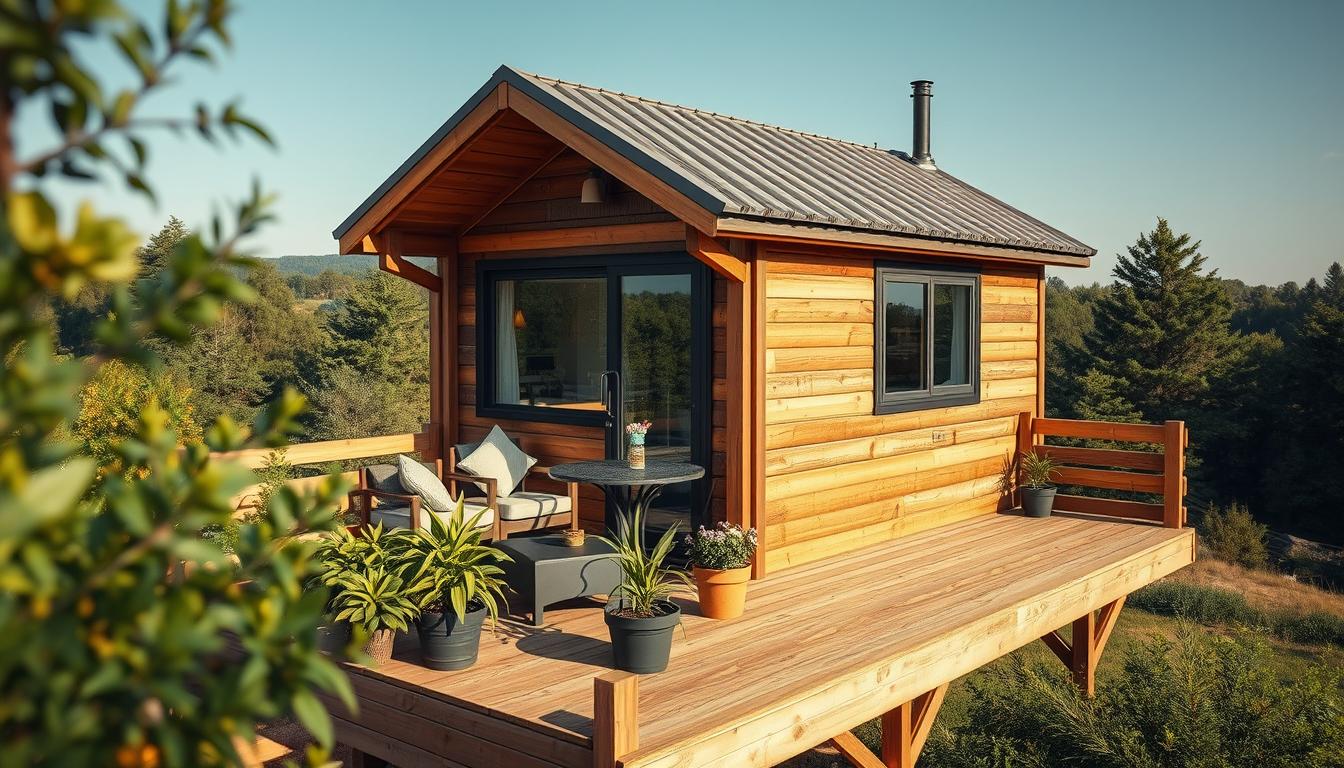
Did you know rooftop decks are a big hit in the tiny house world? They’re especially popular for homes on wheels. These decks add extra outdoor space, making tiny homes in the UK even better. They’re perfect for those who love simple designs or care about the environment.
Roof decks make tiny houses more appealing and offer a private spot to enjoy nature. Creating a roof deck requires careful planning. You need to think about the structure and how to keep it dry.
In this article, we’ll cover modern and eco-friendly designs, materials, and how to build a roof deck for tiny houses on wheels. We’ll share design ideas and practical tips. Let’s make your tiny home even better!
Key Takeaways
- Rooftop decks provide valuable additional outdoor living space, particularly for tiny houses on wheels.
- Innovative designs include features like roll-back roofs and fold-down railings.
- Structural support and weatherproofing are crucial for roof deck safety and longevity.
- Access solutions such as external ladders or operable skylights minimise the risk of leaks.
- Building regulations and codes must be considered when designing a tiny house roof deck.
Introduction to Tiny House Roof Decks
Tiny house roof decks are a new twist in the tiny house movement. They turn unused rooftop space into a valuable outdoor area. This makes tiny houses even more appealing for those who love outdoor living.
What is a Tiny House Roof Deck?
A tiny house roof deck is a special feature that makes the most of the rooftop. It’s built to be strong, so you can use it for relaxing, eating, or even growing plants. It’s a great way to mix indoor and outdoor living, loved by many in the tiny house community.
Benefits of Roof Decks in Tiny Homes
Roof decks in tiny homes offer many advantages. They add a private spot for chilling out. It’s perfect for parties, enjoying views, and being close to nature. Plus, you can grow your own food, making your home more eco-friendly.
They also help you earn extra money. If you rent out your tiny home, a nice roof deck can attract more guests and higher prices. It’s a luxury that makes tiny living even better. With a roof deck, you get more space, making every bit of your home useful.
Design Inspiration for Tiny House Roof Decks
Looking into design ideas for tiny house roof decks reveals endless ways to mix style and use. You can go for a sleek, modern look or add eco-friendly touches. The goal is to make a space that’s both useful and looks great.
Modern Minimalist Designs
Modern minimalist design is all about simplicity and clean lines. It focuses on useful spaces without clutter. Composite decking is a top choice for its modern look and low upkeep.
When designing a minimalist roof deck, think about clear views and simple layouts. This helps make the most of the space and creates a calm feel.
Choosing the right furniture is key in minimalist design. Look for pieces that are stylish yet don’t take up too much room. A built-in bench with cushions is a great example of a space-saving, stylish option. A weather-resistant dining set adds elegance to outdoor dining.

Eco-friendly and Sustainable Designs
Eco-friendly construction is central to sustainable architecture. Using these ideas in roof deck designs boosts their green credentials. Sustainable designs often use materials like bamboo or reclaimed wood, combining eco-friendliness with beauty.
Adding green roofs or potted plants creates a natural haven. These not only look good but also improve air quality and insulate the space. Rooftop gardens are a prime example of eco-friendly design, turning city rooftops into green oases.
Installing solar panels and rainwater collection systems makes a tiny house roof deck even greener. These systems cut down on energy and water use, supporting a self-sufficient lifestyle.
By combining minimalism with eco-friendly elements, we can create roof decks that are stunning, practical, and kind to the planet.
A rooftop deck covered with colourful greenery extends from the hillside like a peninsula of blooming meadow flowers, showcasing the harmonious blend of sustainable architecture and modern design aesthetics.
Best Materials for Tiny House Roof Decks
Choosing the right materials for your tiny house roof deck is key for safety and style. With more people turning rooftops into decks, picking sustainable, durable, and eco-friendly options is vital. We’ll look at wood and metal, two top picks.
Wood: Pros and Cons
Wood is a favourite for tiny house decks because it looks natural and is easy to build. It fits well with the outdoors, making spaces feel welcoming. But, wood needs regular care to last long and stay safe from the weather.
- Pros:
- Natural beauty and warm look
- Easy to build and customise
- Can be eco-friendly
- Cons:
- Needs constant upkeep
- Can get damaged by weather and rot
- May need treatments for bugs and pests
Metal: Pros and Cons
Metal decking is sleek, modern, and needs little care. It’s strong and can handle tough weather, making it a smart choice for tiny houses. Yet, metal is pricier and not as good at keeping warm as wood.
- Pros:
- Very durable and low maintenance
- Stands up to harsh weather
- Looks modern
- Cons:
- Expensive to start with
- Not as good at keeping warm
- Can be noisy in the rain
Both wood and metal have their good and bad points. It’s important to think about what you need and want. For expert help, Outdure offers solutions like their Qwickbuild system. It’s light but strong, perfect for rooftop decks.
Adding a Rooftop Deck to a Tiny House on Wheels
Adding a rooftop deck to a tiny house on wheels creates a unique outdoor space. But, it also brings challenges and things to think about. It’s important to make sure the structure is strong and can handle the extra weight safely.
Structural Considerations
When you add a rooftop deck, the tiny house’s structure is key. You need to make the frame stronger to support the deck’s weight. This keeps the house stable and safe to move.
Experts suggest using four steel columns for support. This helps the deck stay up without harming the house’s mobility. Composite decking is also a good choice because it lasts long and needs little care.

Weight Distribution
It’s vital to keep the tiny house balanced to ensure it stays stable and safe on the road. You must think about the deck’s weight and how people will move around on it. The roof’s slope is also important, with a minimum of 2/12 to prevent water damage.
Following local building rules is also crucial, especially for decks over 30 inches high. This keeps everyone safe and ensures the deck is built right.
| Factors | Description |
|---|---|
| Roof Slope | Minimum 2/12 for runoff |
| Support Columns | Four steel columns recommended |
| Materials | Composite decking preferred |
| Local Regulations | Specific guidelines for decks 30+ inches high |
| Weight Distribution | Account for dynamic and static loads |
By considering these points, your tiny house on wheels can have a lovely rooftop deck. It’s all about making the house strong, balancing the weight, and following the rules. This way, you get a cozy, mobile home with a great outdoor space.
Innovative Tiny House Roof Deck Ideas
In the world of tiny house living, every inch of space counts. Roof decks are a clever way to make the most of your space. They combine innovative design with practical solutions. Let’s look at two roof deck ideas that are both versatile and self-sufficient.
Convertible and Roll-back Roofs
Convertible roofs are a top choice for tiny houses. They can change from a solid roof to an open deck. This is done through mechanical or manual systems, making it easy to switch between sheltered and open-air spaces.
The Wilderwise tiny house is a great example. It can go from 13-feet 3-inches to 17-feet tall. This two-story tiny house has about 295 square feet of living space. Its liftable roof makes it legal to move while still offering lots of space.
The Wilderwise is surprisingly light, weighing only 8,000 pounds. This is thanks to its lightweight yet strong SIPs panels and framing. The use of 95% aluminium and 5% steel makes it durable. Plus, its modular design makes it easy to move around tight spaces.
Rooftop Gardens
Turning your tiny house roof into a garden is another smart idea. These gardens offer a peaceful spot and help you grow your own food. They also improve air quality, offer health benefits, and connect you with nature.
Creating a rooftop garden needs careful planning and the right materials. This ensures the structure can handle the garden’s weight and drainage. It’s a way to live sustainably and make the most of outdoor space in cities.
| Feature | Convertible Roof | Rooftop Garden |
|---|---|---|
| Additional Space | Up to 295 sq ft | Varies based on design |
| Weight Considerations | 8,000 pounds (dry weight) | Supports soil and plant weight |
| Insulation Benefits | Varies with materials used | High – acts as a natural insulator |
| Sustainability | Moderate – depends on materials | High – promotes greenery |
Maximising Small Space Living with Roof Decks
Adding a roof deck to tiny houses is a smart move. It combines space-saving ideas with ways to make living compact better. Roof decks use vertical space to grow your living area without making your home bigger. This is great for tiny homes, where every inch matters.
Roof decks are also a creative way to use space. They can be many things:
- Places for fun and chilling out with friends.
- Areas for storing outdoor gear or gardening tools.
- Spaces for solar panels and other green energy solutions.

Choosing durable materials like composite decking is wise. It looks like wood but lasts longer and needs little upkeep. Adding furniture that does more than one thing, like a fire pit table, makes the space even more useful. This way, you get comfort without losing functionality.
Mirrors and smart lighting are key for tiny roof decks. Mirrors make small spaces look bigger and more welcoming. Good lighting highlights certain areas, making them stand out and improving the mood.
For DIY fans, adding a rooftop water feature or garden is a smart choice. It’s affordable and adds beauty and calm. Using eco-friendly materials like recycled steel and bamboo shows you care about the planet. This fits well with the tiny home lifestyle.
Amazon has lots of help for those starting their roof deck projects. They offer tips and places to find materials. For more info and resources, check out their tiny house resources section.
In short, roof decks are a clever way to make the most of small spaces. By turning the rooftop into a lively, useful part of your tiny home, you can really expand your living area.
Access Solutions for Tiny House Roof Decks
It’s important to find good ways to get up to tiny house roof decks. This makes them useful and safe. We look at two great options: external ladders and operable skylights. Both offer easy access and look good too.
External Ladders
External ladders are a simple and space-saving way to get up to roof decks. They are made to be safe, with strong materials and solid parts. They are easy to put up and keep in good shape, which tiny house fans like.
These ladders can be made to fit your tiny home’s look. They work well with the design, making them key for tiny homes.
Operable Skylights
Operable skylights are great because they let you in and out and bring in light. They make living in the home better by connecting indoors and outdoors. They also make the home look better.
New skylight tech makes them energy-saving and easy to use. Whether you can open them by hand or with a button, they are smart. They make getting in and out easy without hurting the home’s look or strength.
Tiny House Roof Deck Design Challenges
Designing a roof deck for a tiny house is tricky. It requires careful planning to ensure safety and durability. You must consider weatherproofing, preventing water damage, and following building codes. These steps are key for a thriving tiny house community.

Weatherproofing and Water Infiltration
In the UK, the weather can be unpredictable. This means you need strong solutions for keeping water out. Companies like Sealoflex offer materials that are top-notch for weather resistance.
These materials help ensure the roof deck can handle rain and snow. Using high-quality waterproof membranes and drainage systems is also vital. They help keep the roof in good condition and prevent leaks.
Building Regulations and Codes
Following building regulations and codes is essential for safety. A tiny house roof deck must meet British standards for structural soundness and safety. Companies like Vagabundo and Wilderwise follow German and European regulations.
For example, Vagabundo’s two-story tiny house has a lifting roof. It meets European road legal requirements and can be moved easily. Making sure your tiny home roof deck meets local codes is important for its long-term safety and your peace of mind.
Outdoor Living: Furniture and Decor for Roof Decks
Creating a welcoming roof deck involves choosing the right furniture and adding nature-inspired touches. With careful selection, your roof garden can become a comfortable and beautiful space.
Choosing Weather-resistant Furniture
Outdoor furniture must be weather-resistant. Look for pieces made from poly-rattan and treated metals. They last long and stay stylish.
The Reims Lounge Set Grey (£1,699.99) and the Bay Large Corner Group Set in Charcoal (£3,799) are great choices. They offer both comfort and durability.
Adding a Kamado BBQ Grill Egg (£799.00) makes your deck perfect for outdoor meals. The Kalama 8 Seat Rectangular Dining Set in Green (£2,399.00) turns your deck into an outdoor living room. For more ideas, check out this guide on covered decking ideas.
Incorporating Greenery and Plants
Adding plants to your roof deck boosts its look and benefits the environment. Use big planters for herbs and greenery. A leafy border or flowering vines like Star Jasmine on railings also add beauty.
- Utilise box containers for homegrown vegetables.
- Add large planters for greenery to foster a lush environment.
- Incorporate flowering vines such as Star Jasmine on railings for added charm.
- Consider setting up a greenhouse for year-round gardening.
Privacy screens improve the space’s feng shui and use. For a warm glow, choose outdoor string lights or solar-powered lights. Hammocks add a cozy touch, making your deck a perfect retreat.
Sustainable Architecture: Tiny House Roof Decks
In the world of tiny homes, living green is key. Every part, like the roof deck, must follow eco-friendly rules. This not only helps the planet but also saves money.
Eco-Friendly Construction Techniques
Building a tiny house roof deck needs careful material and method choice. Using recycled stuff and local materials cuts down on waste and supports green building.
- Recycled Materials: Using recycled wood or metal makes your roof deck strong and unique.
- Local Sourcing: Choosing materials close to home cuts down on emissions from transport.
- Eco-Conscious Methods: Using green building techniques makes your tiny house better for the planet.
Energy Efficiency Considerations
Energy saving is crucial for tiny house roof decks. It leads to big savings and living greener. Features like solar panels and insulation are key.
- Solar Panels: Solar panels on your roof deck cut down on grid electricity use.
- Thermal Insulation: Good insulation keeps your home comfy all year, saving on heating and cooling.
Also, using reflective roof materials helps keep your home cool. This makes your tiny house both useful and kind to the environment.

| Energy-Saving Feature | Benefit |
|---|---|
| Solar Panels | Reduces electricity bills by generating renewable energy. |
| Thermal Insulation | Maintains indoor temperature, thereby reducing heating and cooling costs. |
| Reflective Pigments | Keeps the house cooler during summer by reflecting solar heat. |
Case Studies: Successful Tiny House Roof Deck Designs in the UK
Looking at case studies shows us the power of roof decks in the UK tiny home market. They show how we can use space in new ways, whether in cities or the countryside.
Urban Tiny Homes
In busy cities, tiny homes with rooftop decks are a big help. These decks add outdoor space and a place to relax away from city noise. For example, a modern cabin in London is over 25 square metres and has a rooftop deck with an outdoor shower.
These designs are all about making the most of every inch. The tiny home in London has big windows that let in lots of natural light. This makes it feel open and connected to the sky and trees, a nice break from the city.
Off-Grid Tiny Homes
Off-grid tiny homes use rooftop decks for green features. A tiny home in the Scottish Highlands is a great example. Its roof deck has solar panels and a rainwater system, making it almost self-sufficient.
These examples show how rooftop decks can make tiny homes work well in different places. They help people live in a way that’s both versatile and eco-friendly, whether in the city or the countryside.
| Feature | Urban Tiny Home | Off-Grid Tiny Home |
|---|---|---|
| Location | London | Scottish Highlands |
| Design | Contemporary cabin, all-white interior, timber features | Rustic, off-grid |
| Key Features | Rooftop deck with outdoor shower, numerous windows | Roof deck supporting solar panels, rainwater system |
| Benefits | Maximises limited space, aesthetic appeal | Self-sufficiency, sustainable living |
Conclusion
Embracing tiny house roof decks is a new way of living in the UK. It mixes beauty with usefulness, changing what we think is possible in small homes. These spaces not only increase the value of homes but also connect us more with nature. This shows that tiny houses are a strong and flexible housing option for the future.
We’ve looked at different designs, materials, and practical tips. It’s clear that roof decks bring many benefits. They use modern, green materials like Georgia Pacific sheathing systems. They also have smart designs that make the most of space.
Roofing experts can help choose and care for the best flat roofs. This ensures your tiny house stays in great shape for years to come.
Adding rooftop gardens and convertible roofs makes tiny houses even better. Whether you want to buy or rent a tiny home, these ideas can lead to a greener and more fulfilling life. As the UK keeps moving towards tiny houses, roof decks will play a key role in making homes eco-friendly and efficient.


